

Classical composition
01 February 2012
THE first opera house of its kind in the Gulf region was recently inaugurated in Oman, 10 years after the country’s ruler Sultan Qaboos gave the go-ahead for the project. And now, construction work is nearing completion on an adjoining retail development known as The Opera Galleria, which will complement the project.
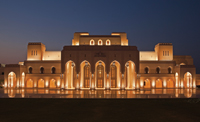
The Royal Opera House Muscat is a glamorous structure built on an 80,000-sq-m plot in Shati Al Qurm, Muscat. The imposing building features an 18,580-sq-m auditorium that can seat 1,100 people, and shares the grounds with a small theatre and the Opera Galleria mall, with at least half the area designated for landscaped gardens. The client is the Royal Court Affairs of Oman.
Despite being classified as an opera house, the main performance space converts from a theatre setting into a world-class concert and organ recital hall.
The complex is a fusion of Omani tradition and modernity, having been conceived as a house for musical arts. “The construction of this iconic and majestic Royal Opera House Muscat building with stunning handmade ornaments, including the sophistication of its rich interior, is in many ways an embodiment of such complexity and multiplicity of references witnessed in Omani architecture,” says a spokesman for the project.
 |
The opera house fuses classical and contemporary architecture. |
This stunning piece of contemporary Omani architecture was designed by WATG, whose portfolio of projects includes some of the region’s prominent landmarks like King Abdullah Economic City in Saudi Arabia and the Atlantis in Dubai, UAE. The main contractor on the development was Carillion Alawi, which started work on the project in April 2007. According to the contractor, launch of work on the project was delayed because of Cyclone Gonu, which affected the progress of work due to the amount of dewatering that was needed.
The complex has a total floor area of 15,380 sq m over six levels and three basement floors. The main structure is reinforced concrete with block infill while the external finishes are Omani marble and render.
The Omani opera house fuses classical and contemporary architecture, with interiors that have been richly adorned with crystal chandeliers, masterfully hand-carved wooden fixtures and inlaid marbles.
According to WATG, the architectural character of the building was influenced by the grand style of modern Omani palaces, and reflects their outward design features and circulation patterns. The front entrance is an expansive palm-treed piazza backed by five tall, arched entryways into a hall that forms the central focus of a colonnade designed to create a grand feeling of entrance. The structure was finished in locally-sourced limestone and complementary stucco. The venue incorporates a movable acoustic shell within the stage area and adjustable proscenium elements to create alternative acoustic configurations and stage formats to suit the various requirements. These elements provide a unique, adaptable volume control arrangement which gives unparalleled natural acoustic potential, says a spokesman for WATG.
The interior work has been done by Yahya Construction, which excels in the design and installation of exquisite marble tiling, wooden joinery and fine furniture manufacturing.
 |
The 1,100-seat auditorium, galleries and entrance arch (below) ... majestic. |
The company began work on the Royal Opera House in late 2009 with strict guidelines on standards and precision. The scope of work included decorative teak wood ceilings and wall cladding for the main auditorium, balconies, reverb chambers, the Royal Box, VIP lounges, decorative carved wooden doors and marble flooring with intricate patterns.
Yahya Construction completed its assignment in 18 months in four stages: design, mock-ups, fabrication, and finally installation at site. “There were a total of 230 working drawings describing each element in exacting detail,” says a spokesman for the company. “At peak stage, there were nearly 300 skilled craftsmen working at both the fabrication factory as well as the actual site. For the intricate carving, nearly one million man-hours, using 35 machines and 65 hand carvers, were needed to complete the work. Some 40 twenty-ft containers of Burma Teak and 4,300 sheets of plywood were used in the project.”
The Opera House is equipped with the latest sophisticated technologies available, like Radio Marconi’s multimedia interactive display seatback system, Mode23, a feature no other opera house has yet installed. In addition, its auditorium has the flexibility to expand and reduce its proscenium arch to fit production requirements.
 |
“Radio Marconi’s Mode 23 is a revolutionary system that turns any cultural and entertainment event into a live multimedia experience that captures the user’s attention, involvement and enthusiasm, thanks to the interactive touchscreen devices integrated on the seat back,” says Stefano De Lissandri, president and CEO of Radio Marconi. “Each user can choose among several video channels, and select a simultaneous translation audio and text in his/her own language with a voting and survey capabilities. Furthermore, each user can decide to visualise specific customised contents or information about the event and the sponsors and also directly purchase through an integrated credit card reader.”
The technical infrastructure has been further boosted with an Optocore optical fibre network system that will enhance connectivity a d route signals to the many different performance spaces within the complex. At the same time, a Madi bridge will enable recording from the proposed capture/production suite whilst using Optocore converters to link with a Midas XL8 front-of-house (FOH) mixing console.
“The whole idea behind Optocore is to enable us to relay audio and record, across the stage areas,” says Bruno Silva, one of ROHM’s sound and broadcast managers. “For instance, if we need to put a band into the second theatre we can use the Optocore to connect the multi-channels to the FOH Midas desk using the local Optocore preamps and to also split the feeds simultaneously to the Capture suite and Lawo mc90 desk, deploying the Madi stream of the DD2FR-FX interface.”
One major feat, achieved in conjunction with the consultants Theatre Projects, was making the main stage and auditorium reconfigurable – adjusting the acoustic space to produce a beautiful sounding seamless concert space.
 |
In addition to the main configurable auditorium, the Optocore network extends coverage to the smaller 80-seat studio theatre, the terrace on the roof of the building, the FOH foyer spaces and to the large outside marbled space (Maidan ).
On the opening night, Sultan Qaboos, himself a music enthusiast, said: “The time has now come to cap that rich heritage (of Oman) by adopting concepts of international culture and contribute to its promotion. Toward that end, we have established the Royal Opera House Muscat as a centre of cultural promotion.”
The Opera Galleria
Meanwhile, work is drawing to a close on The Opera Galleria (formerly The Opera Mall), which is designed to complement the opera house.
The Opera Galleria will house about 60 retail stores and an array of fine and family dining options over two levels. An emphasis has been placed on ensuring that it is not just a place to shop, but a venue to socialise and relax away from the bustle of the outside world.
The development will feature an array of a carefully balanced fashion, gems, watches, perfumes and quality home-ware outlets. Antiques, art and handicrafts will be present as The Opera Galleria is likely to become a much visited tourist destination and therefore a traditional “Arabian style” colonnade will be home to such retailers.
The development, spread over 6,500 sq m and offering a built-up area of 21,000 sq m, has extensive car parking and will be linked ultimately by footbridge to the adjacent Intercontinental Hotel site. The car park is over two levels with a built-up area of 19,000 sq m with space for 540 cars. It has been designed by SSH International.
Liberal use of quality marble, etched glass and bronze work will provide the backdrop for all the shops, bistros and cafes. With three voluminous atrium areas, the Galleria will be flooded with natural light providing a unique ambience and welcome addition to the shopping experience Oman has to offer its residents and visitors alike.
