

Eurovent Middle East is intensifying efforts to prepare the Gulf’s HVACR industry for a low-carbon future through education, certification and regulatory collaboration, according to Executive Director Nerissa Deoraj.
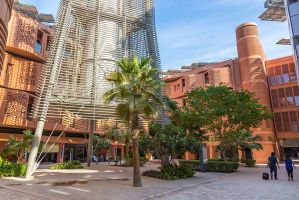
The days of viewing sustainability as a mere “add-on” or regulatory hurdle are over. For the GCC construction industry, adapting to sustainable practices has become the single most vital factor for operational efficiency, market competitiveness, and future compliance.
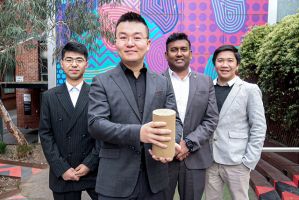
Engineers at Australia’s RMIT University have developed a ground-breaking sustainable building material called cardboard-confined rammed earth, which combines cardboard, soil, and water to create structural components that are claimed to have about one quarter of concrete’s carbon footprint.
A global coalition of engineers has issued an urgent call for a fundamental shift in infrastructure development, urging the industry to adopt “nature-positive engineering” (NPE) to tackle the climate and biodiversity crises while unlocking economic opportunity.
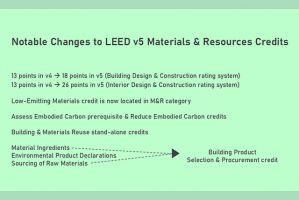
US Green Building Council (USGBC), the global developer of the LEED (Leadership in Energy and Environmental Design) standards, last month opened certification to the LEED v5 rating system and announced new tools and resources for users of the world’s most widely used green building certification program.
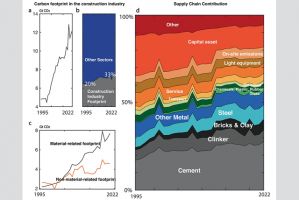
A recent Nature Communications study indicates that even if all other sectors went net-zero today, emissions from construction alone would still push the world beyond the Paris Agreement’s 1.5 deg C target by 2050. The sector produces roughly a third of global CO₂ emissions, mostly from manufacturing cement, steel, and bricks.
.jpg)
NEU: An ACI Center of Excellence for Carbon Neutral Concrete, has announced the release of The Low-Carbon Concrete Guide: Materials, a guide authored by Mary Christiansen, PhD, LEED AP.
