

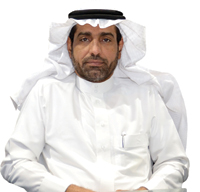
Al Qahtani ... smart plan.
Rajhi Steel to launch new rolling mill
01 July 2012
SAUDI-BASED Rajhi Steel, which successfully completed the test run of its new rolling line in May, is all set to make it fully operational shortly.
The estimated SR900-million ($240 million) project, carried out by Italy-based Danieli, has involved the construction for a new rolling mill and steelmaking plant upgrade which has transformed the 850,000-tonne steel melt shop in Jeddah – which was also supplied by Danieli – into one of the most technologically advanced mini mills in the world. The expansion, which has taken the company’s total production capacity to more than two million tonnes of steel annually, enables it to produce 750,000 tonnes of rebar in sizes ranging from 10 to 40 mm, and 250,000 tonnes of smooth and corrugated coils ranging from 5.5 to 16 mm in size.
 |
|
Capacity boost ... Rajhi Steel can now produce 2.2 million tonnes of steel. |
Rajhi Steel also plans to establish a direct reduced iron (sponge iron) factory with a total capacity of 1.8 million tonnes and expand its output of commercial steel.
“We have followed a smart strategy to implement this project in order to fast track its completion, while ensuring strict adherence to quality standards in all work phases of the project,” says Mahdi bin Nasser Al Qahtani, president of Rajhi Steel.
The project includes a reheating billets furnace with capacity of up to 200 tonnes per hour, and a state-of-the-art line for rebar production – aimed at raising the product quality as well as the output of the factory – as well as a coil production line. The rolling mill will produce rebar of varying sizes according to US and British standards.
Al Qahtani says the expansion has been aimed at meeting the rising demand for steel in the domestic market. “Rajhi Steel has been keen to keep pace with the demand created by the launch of mega projects in line with the initiatives of the Custodian of the Two Holy Mosques to support growth and has invested in this facility to produce one million tonnes per year of steel in order to contribute to the economic development of the kingdom. This will also contribute to market stability.”
 |
|
Rajhi Steel’s facilities ... state of the art. |
He estimates that Saudi Arabia’s current production stands at 8.7 million tonnes a year – most of which is absorbed by the domestic market – with Rajhi Steel accounting for about 20 per cent of the output at 2.2 million tonnes.
He attributes the shortages of steel in the market to the large number of development projects under way in various sectors and the need for some special sizes that are not available locally. He points out, however, that steel prices have not changed over the last two years, which has led to confidence in the market. The previous rise, he adds, can be considered exceptional and linked to the global economic crisis in 2008; and the Saudi market has not seen a hike in steel prices since late 2009.
He adds that the price of imported steel is about SR50 to SR60 ($13.33 to $16) per tonne less than local steel.
Most of the raw materials for the production of steel is imported, with the scrap material from the local industry also used in the smelting processes. Rajhi Steel, he says, smelts more than 1.1 million tonnes – equivalent to 80 per cent of the domestic market’s scrap – with 95 per cent of the steel billets used in its processes procured from overseas markets.
In view of the greater environmental awareness worldwide, Rajhi Steel is looking at the possibility of transporting hot direct reduced iron directly from the reducing furnace to a waiting electric arc furnace to charge it, in a bid to save energy and costs.
 |
Rajhi Steel began operations as an independent entity in 1977 with a rebar factory having a production capacity of 130,000 tonnes, under the leadership of Mohammed Abdulaziz Al Rajhi. Initially set up to support the group’s projects, the company has seen steady growth to include four factories located in Riyadh and Jeddah, producing about 2.2 million tonnes of steel.
The Riyadh factory accounts for 750,000 tonnes of capacity and also produces 180,000 tonnes of galvanised pipes, tubes, steel sheets, pipes and angles.
Mohammed Abdul Aziz Al-Rajhi & Sons group of companies includes various factories specialised in producing different types of steel products. These include the Al Assemah Steel Products Factory and Rajhi Steel Industries Factory, both in Riyadh, and Al Assemah Steel Billets Production in Jeddah. Apart from supplying its domestic market, Rajhi Steel exports to the GCC and other neighbouring markets.
- Cares supports Gulf green compliance
- Far East wins boost Zamil global profile
- B2B portal opens doors to steel world
- Rajhi Steel to launch new rolling mill
- Quality boost for Emirates Steel
- AceCad system helps improve cost efficiency
